
Nipple Shields: How, Why and When to Use One
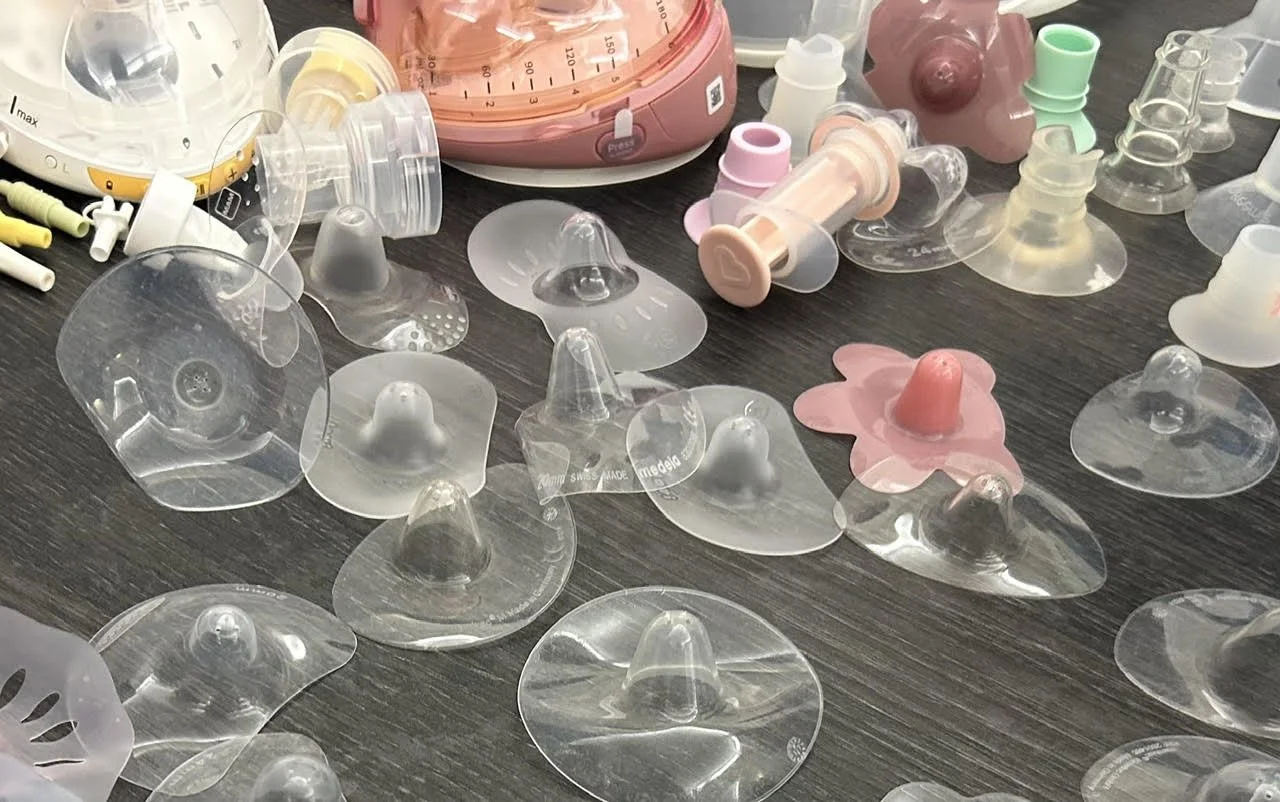
If you’ve been offered a nipple shield in those tender, early days of breastfeeding, you’re not alone. They’re one of the most commonly reached for tools in a maternity bag and one of the most misunderstood. Used thoughtfully and with proper support, a nipple shield can be a genuinely useful bridge through a difficult patch. Used without guidance, it can create new problems while quietly masking the original one.
Here’s what I want every parent to know before they reach for one.
What is a nipple shield?
A nipple shield is a thin, soft silicone cover, shaped a bit like a hat with a wide brim, that sits over your nipple and areola during a feed. Milk flows through small holes at the tip so your baby can still feed with it in place.
Why might one be suggested?
A shield doesn’t fix a feeding problem on its own, it changes the sensation and shape your baby feels in their mouth, which can sometimes help them to organise their latch more easily. It gives a firmer, more defined stimulation to the roof of the mouth, which can help trigger a sleepy or disorganised suck. It can also sometimes, but not always, help with pain, while other work like positioning, attachment, tongue function is sorted out underneath.
When a shield can help:
Prematurity or low muscle tone, where a baby’s suck is weak or disorganised and needs a firmer, more predictable surface to latch onto
Tongue-tie, as a temporary support while waiting for assessment or a revision
Significant nipple damage or pain, to allow healing while feeding continues, alongside work on the underlying cause
Bottle-to-breast transitions, where a baby is used to a firmer teat and needs a stepping stone back to the breast
For a flatter or inverted nipple when skilled support hasn’t facilitated a good latch
If there has been considerable damage to help support comfortable expressing
What are the risks
This is the part that can often get missed out. A poorly fitted shield, or one used without a follow-up plan, can:
Reduce milk transfer, because it changes how efficiently milk moves from breast to baby
Affect your supply over time, if the breast isn’t being drained effectively
Become a habit that’s hard to break, if there’s no weaning plan to remove it.
Mask rather than resolve the real issue.
A shield can make feeding possible without making it optimal, especially when tongue function or positioning hasn’t been properly assessed
This is why lactation consultants frame shields: not as a fix, but as one option or tool among others: bottles, cups, syringes, finger feeding, supplementory nursing systems (sns), each with its own place, and each requiring genuine clinical judgement about why it’s being used, not just reflexive reaching for the nearest tool on the shelf.
How to use one well
If a shield is the right choice for your situation, getting the details right matters:
Get the size and shape right for your breast and your baby. Why it’s being used can help determine this. This is worth having assessed in person rather than guessed.
Invert the tip slightly to create a light suction that helps it stay put (watch the following video)
Look for effective feeding, listen and watch for swallowing, and track wet and dirty nappies and monitor breast fullness.
Have your baby weighed regularly while a shield is in use, so you know feeding is going well.
Make a weaning plan from day one. A common approach is starting the feed with the shield on to help your baby latch, then easing it off partway through once they’re feeding well, and relatching directly. Some babies drop it on their own; others need a gentler, staged approach.
When to get support
A nipple shield is rarely a decision to make alone, and it’s never something to persist with indefinitely without review. If you’ve been given one — or you’re wondering whether you need one — it’s worth having a proper feeding assessment first. The shield might be exactly right. Or the real issue might be a latch that can be adjusted, a tongue that needs assessing, or positioning that just needs a few tweaks. You won’t know which until someone looks properly.
If you’re struggling with feeding and wondering whether a shield is the right next step, get in touch — I’d love to help you work out what’s actually going on, and find the right way through it.